
Helping You See Clearly with Keratoconus or Irregular Corneas
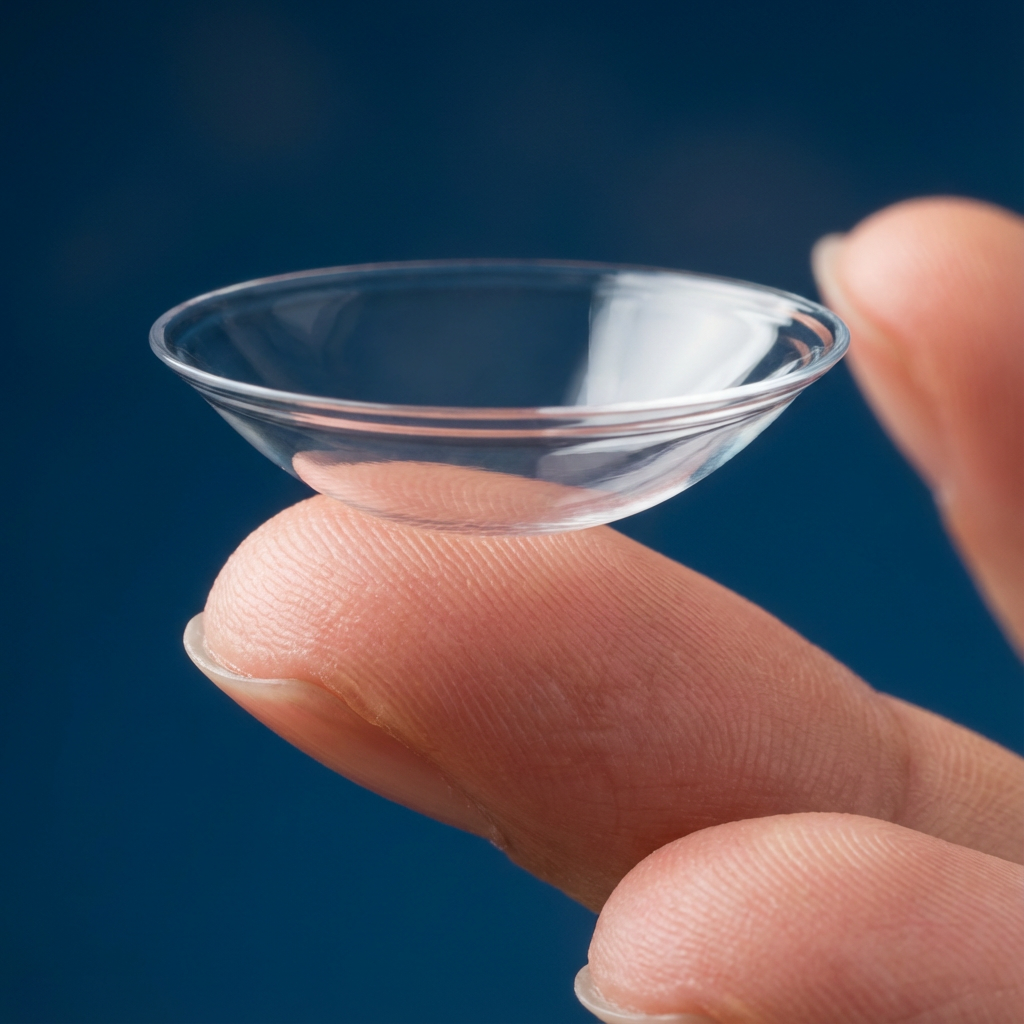
If you’ve been diagnosed with Keratoconus or have an irregular cornea shape, you’re not alone and clear vision is still within reach.
At Advanced Lens & Vision Care, we focus on non-surgical solutions to improve sight for people with these corneal conditions. Using advanced custom contact lenses and modern technology to design them, we help restore clarity, comfort, and confidence to your vision.
Understanding the condition
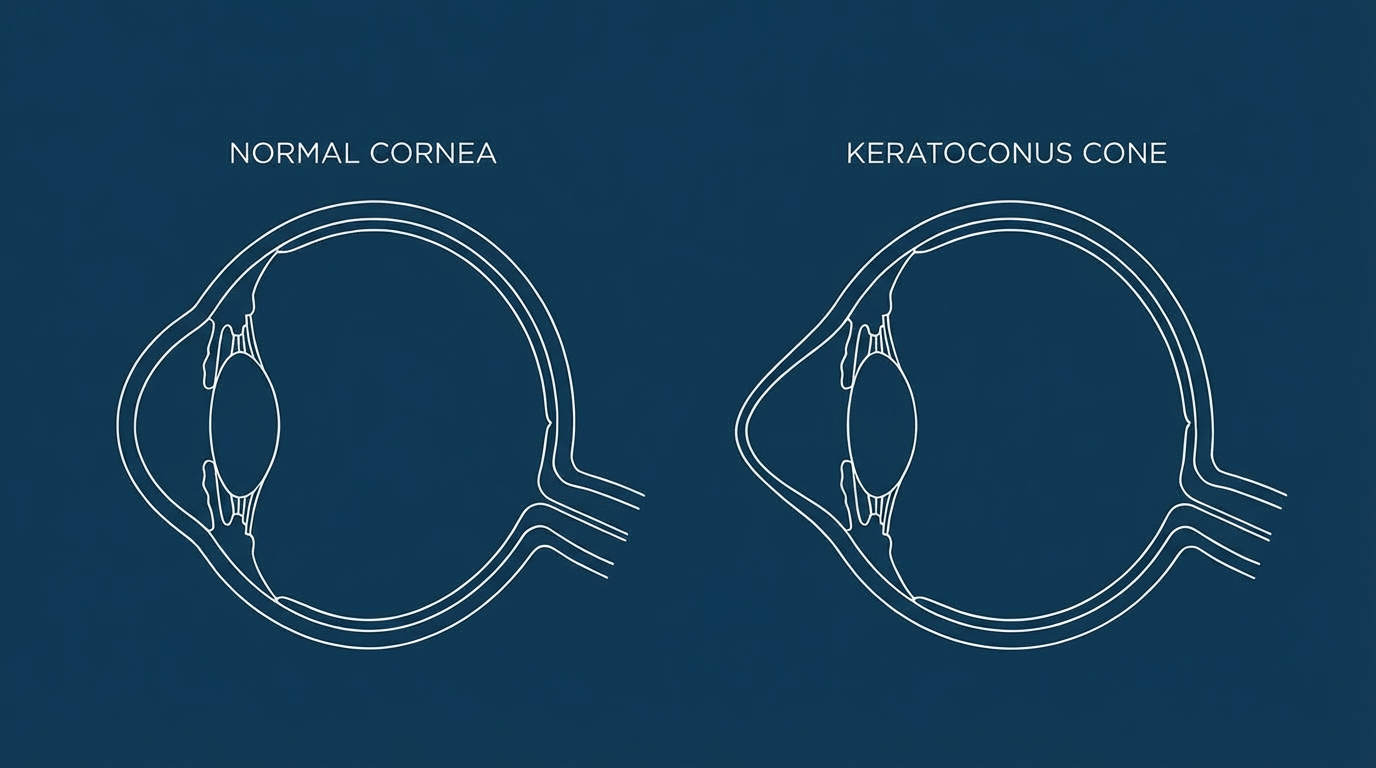
Keratoconus is a condition where the cornea gradually thins and bulges into a cone shape. Instead of being smooth and round, a Keratoconic cornea is uneven, which causes blurry, distorted vision, ghosting, streaky lights or halos at night and glare.
Other types of corneal irregularities can occur from eye injuries, surgeries (like LASIK complications), or corneal scarring.
These irregular corneas often cannot be fully corrected with standard glasses or soft contact lenses, because the abnormal shape prevents light from focusing properly.
Custom Lens Solutions for Irregular Corneas
Rigid Gas Permeable (RGP) Lenses
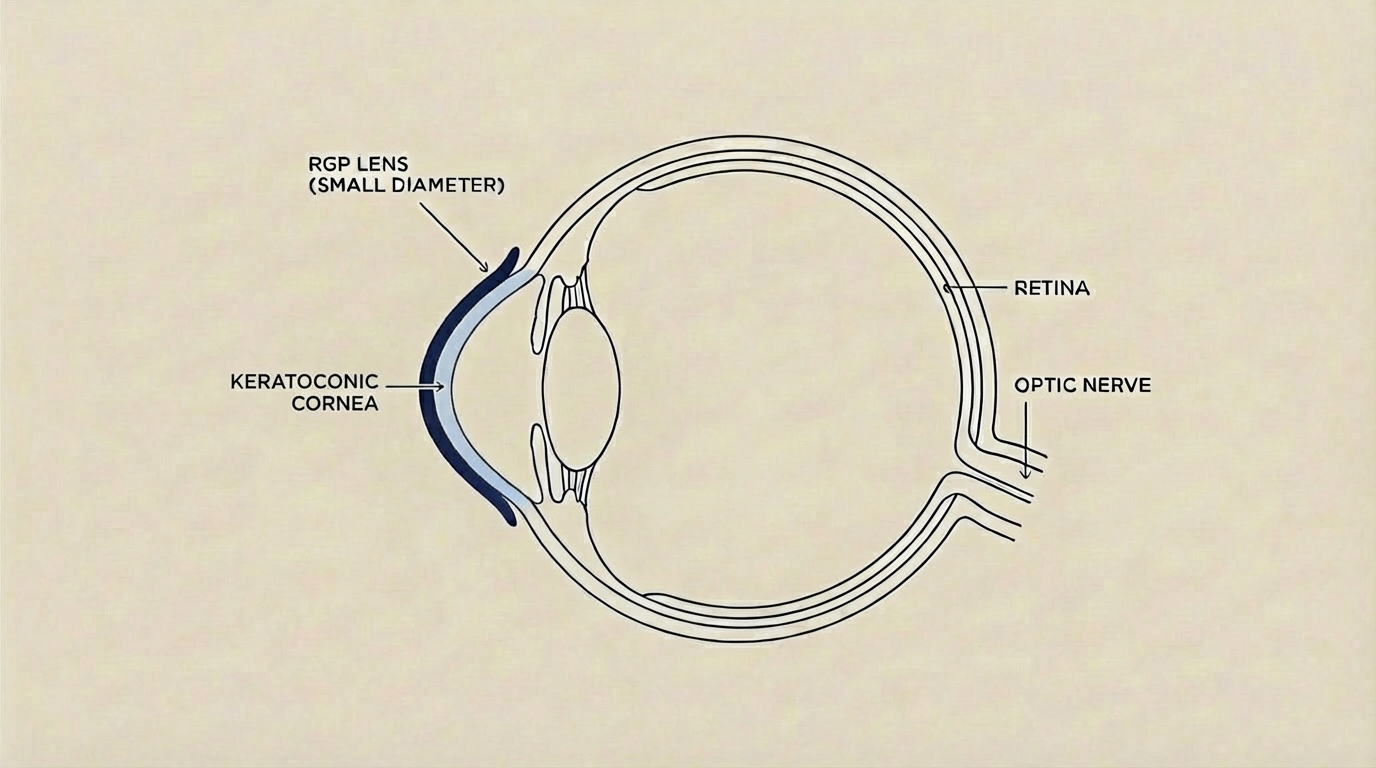
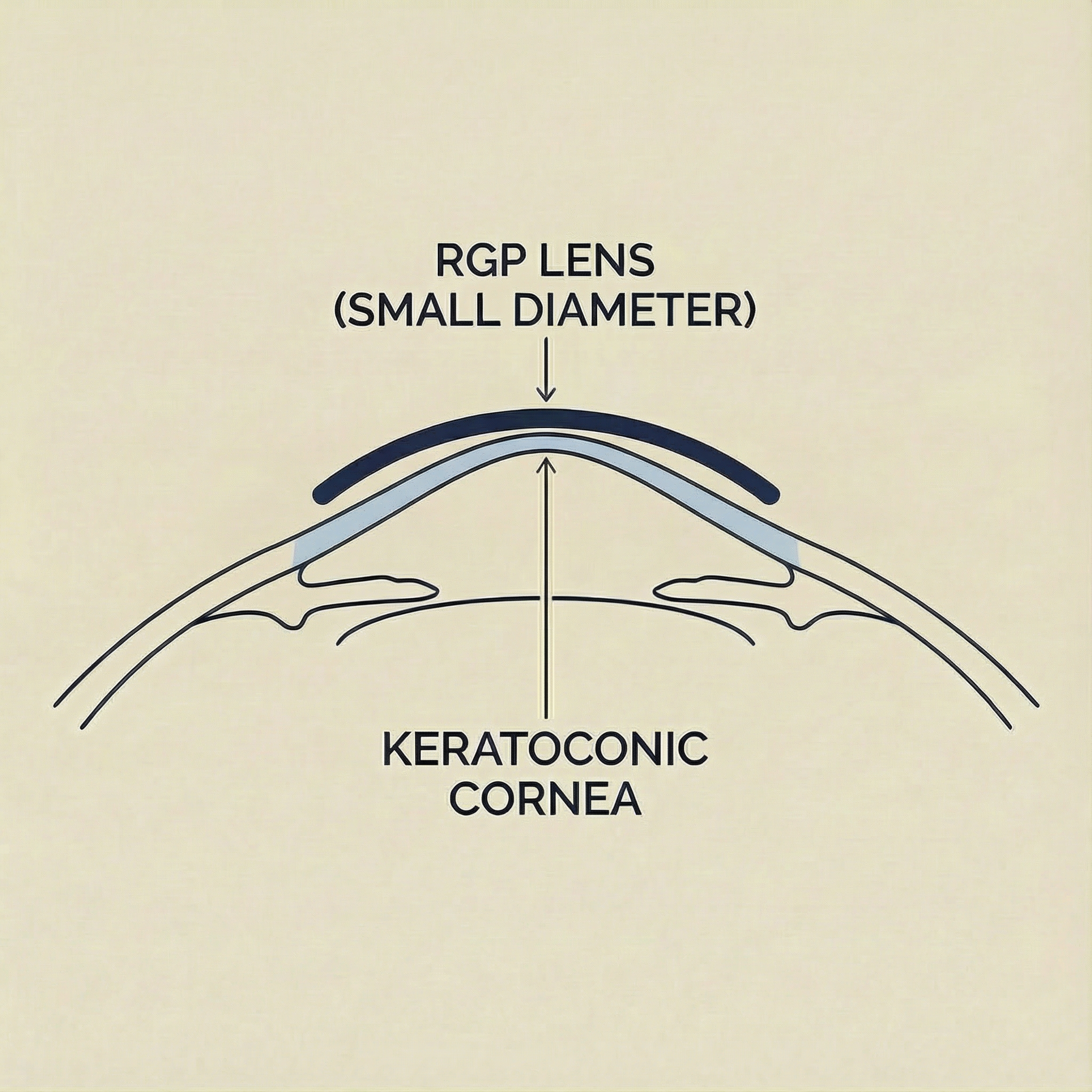
Small firm lenses that sit on the cornea, masking its irregular shape. They provide excellent optics and have been used for keratoconus for decades. RGPs can greatly improve vision
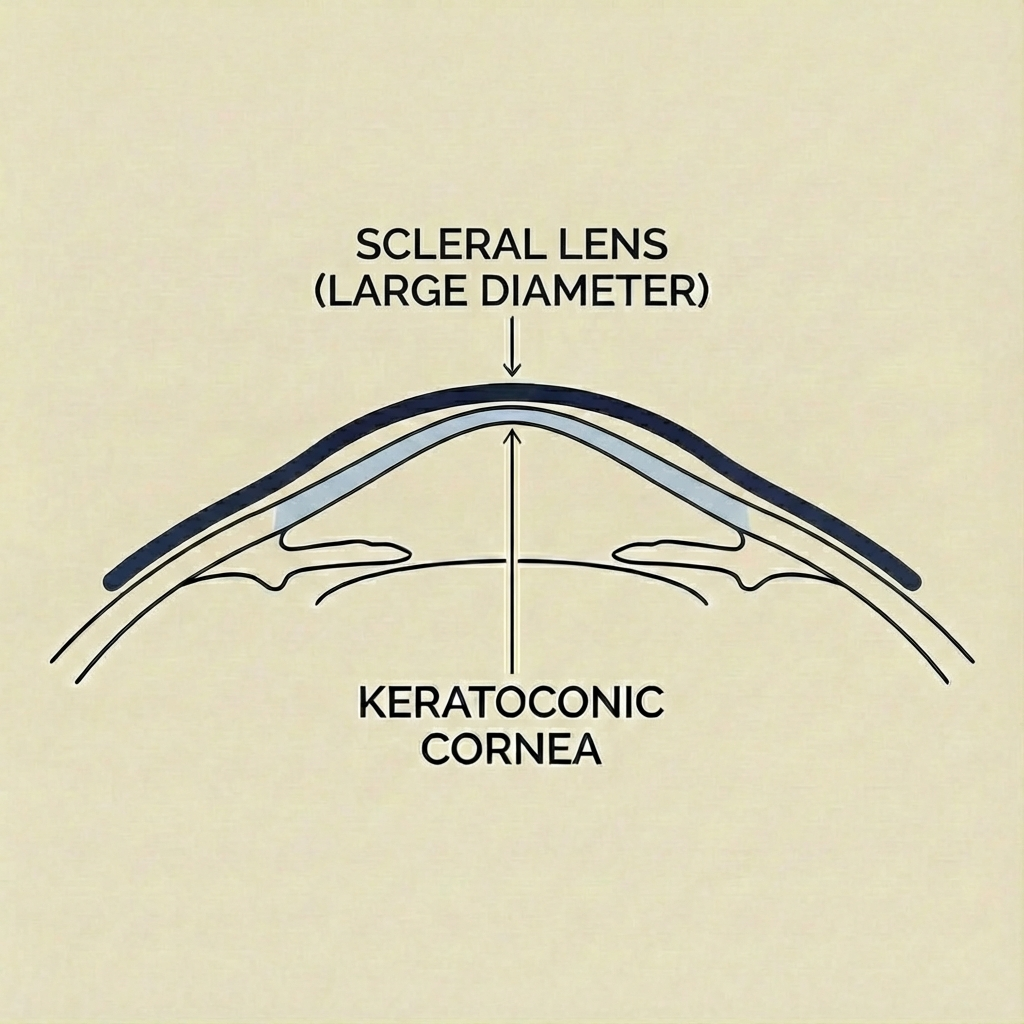
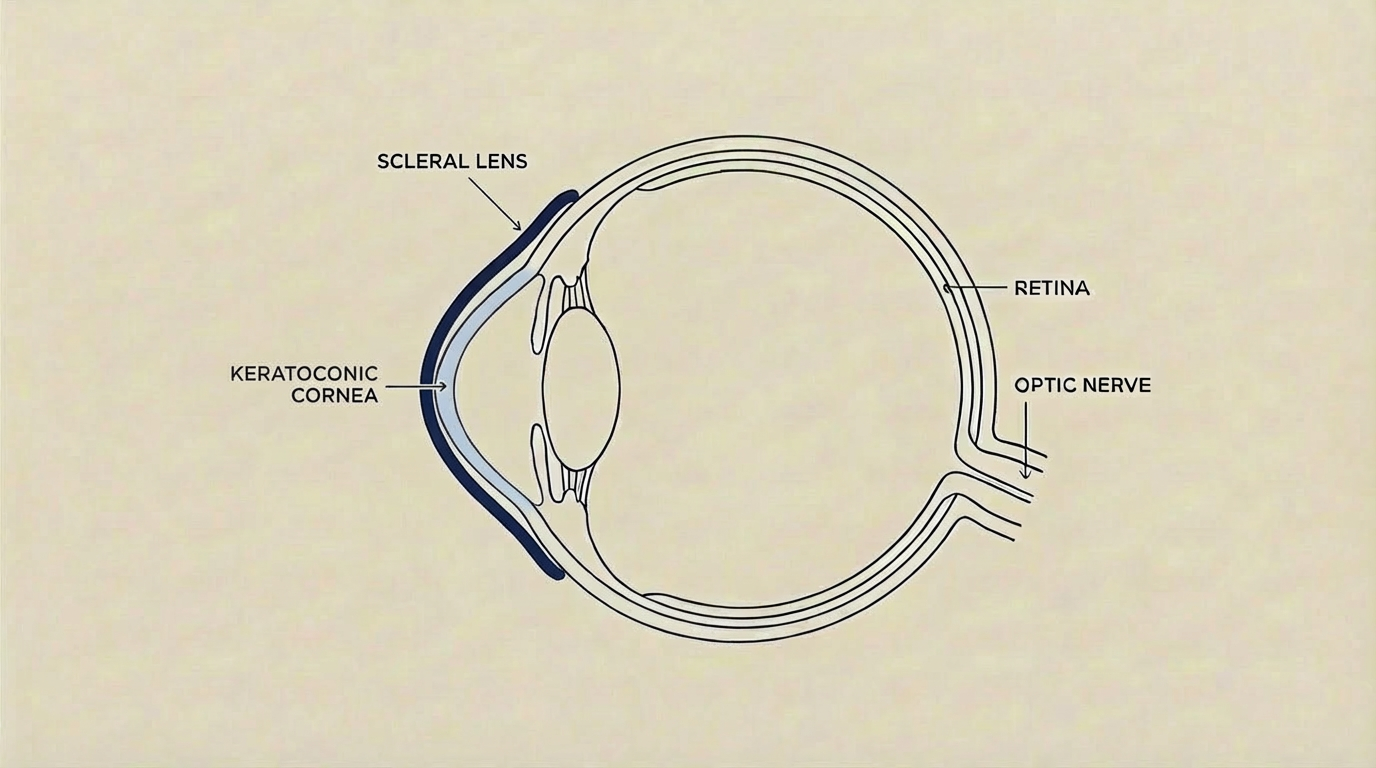
Scleral Lenses
Large diameter lenses that rest on the sclera (the white part of the eye) and vault completely over the cornea without touching it. A scleral lens creates a tear filled chamber over the cornea, smoothing out even very steep or scarred corneas. Often the most comfortable option for advanced cases.
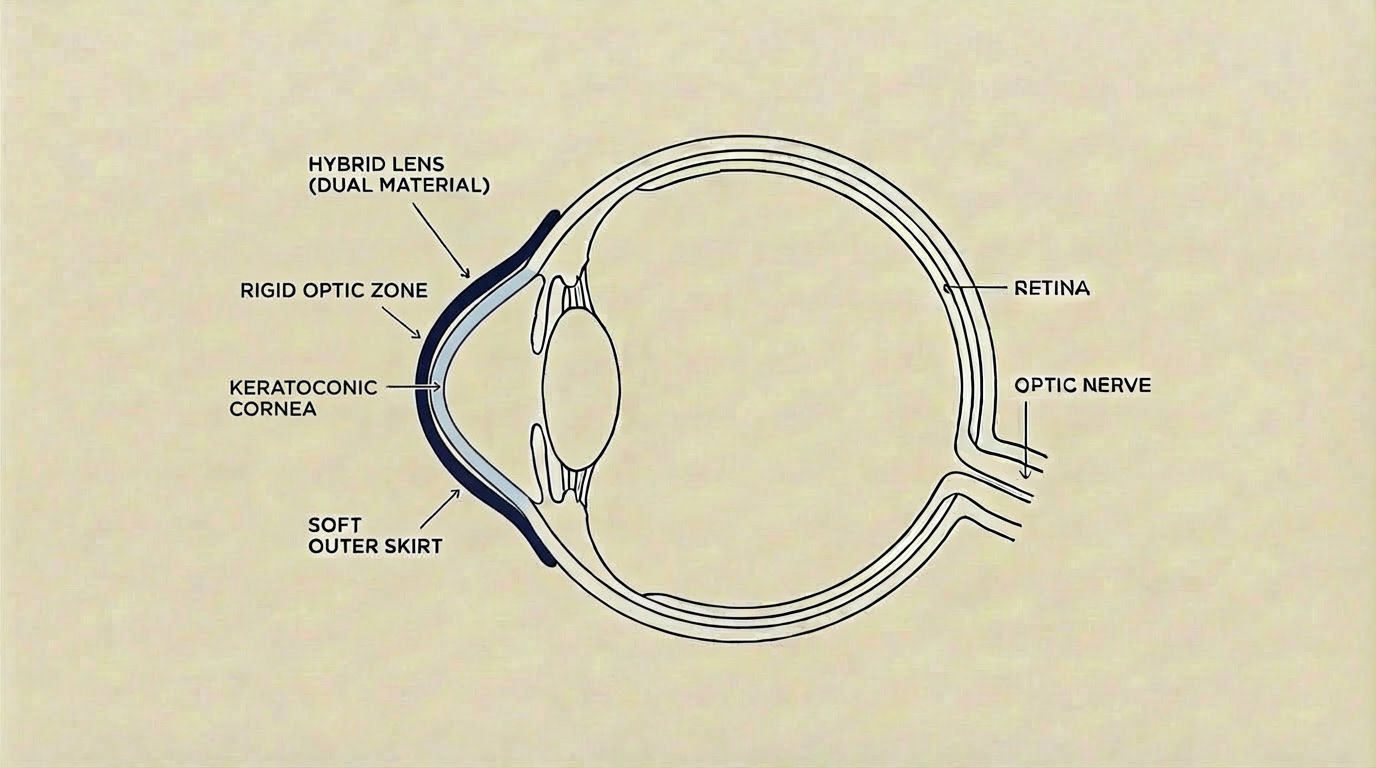
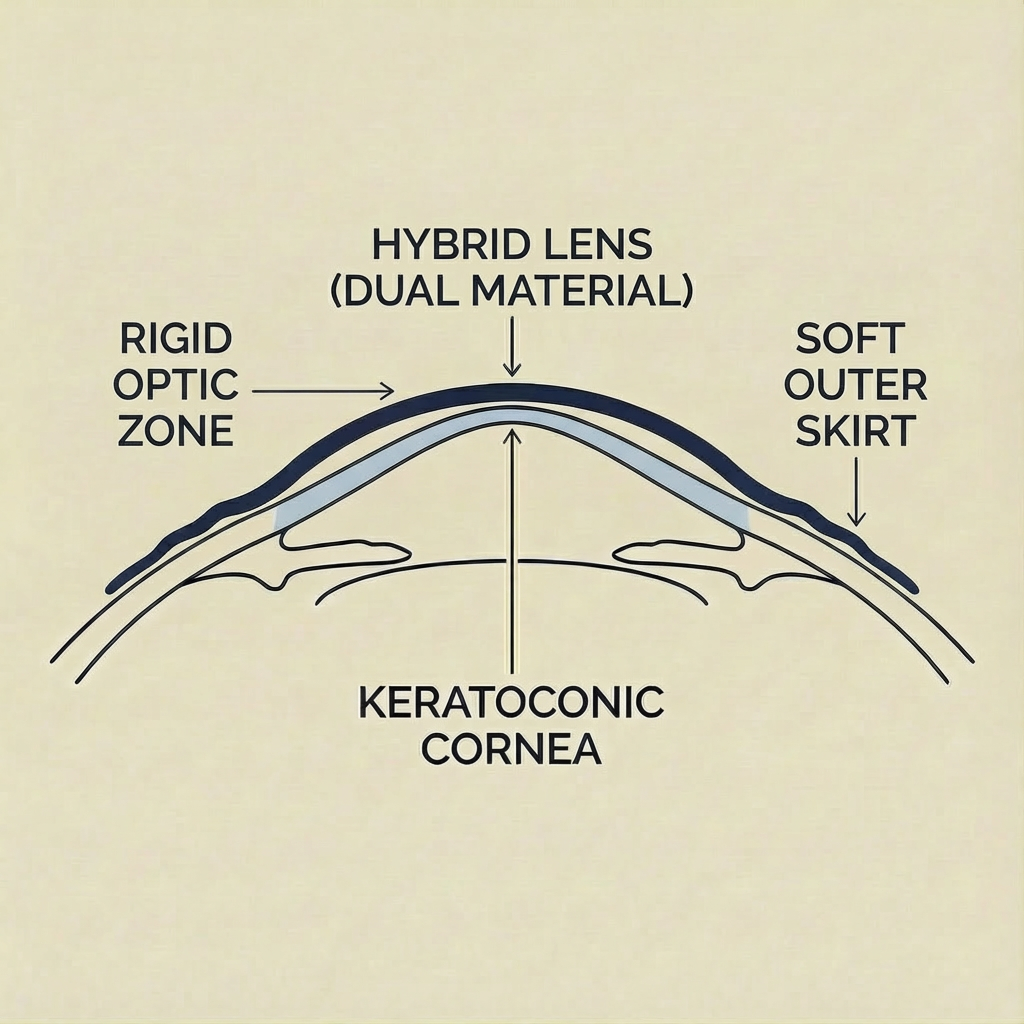
Hybrid Lenses
In some cases, we may use hybrid lenses (which have a hard center and soft skirt) or custom-designed soft lenses made specifically for keratoconic eyes. These can be useful for certain corneas or for patients who cannot tolerate other lens types. We will determine the best option based on your corneal shape, severity of condition, and lifestyle needs.
Your Personalised Custom Lens Journey
-
![Close-up of an eye test phoropter with multiple lenses and dials in an optometrist's office.]()
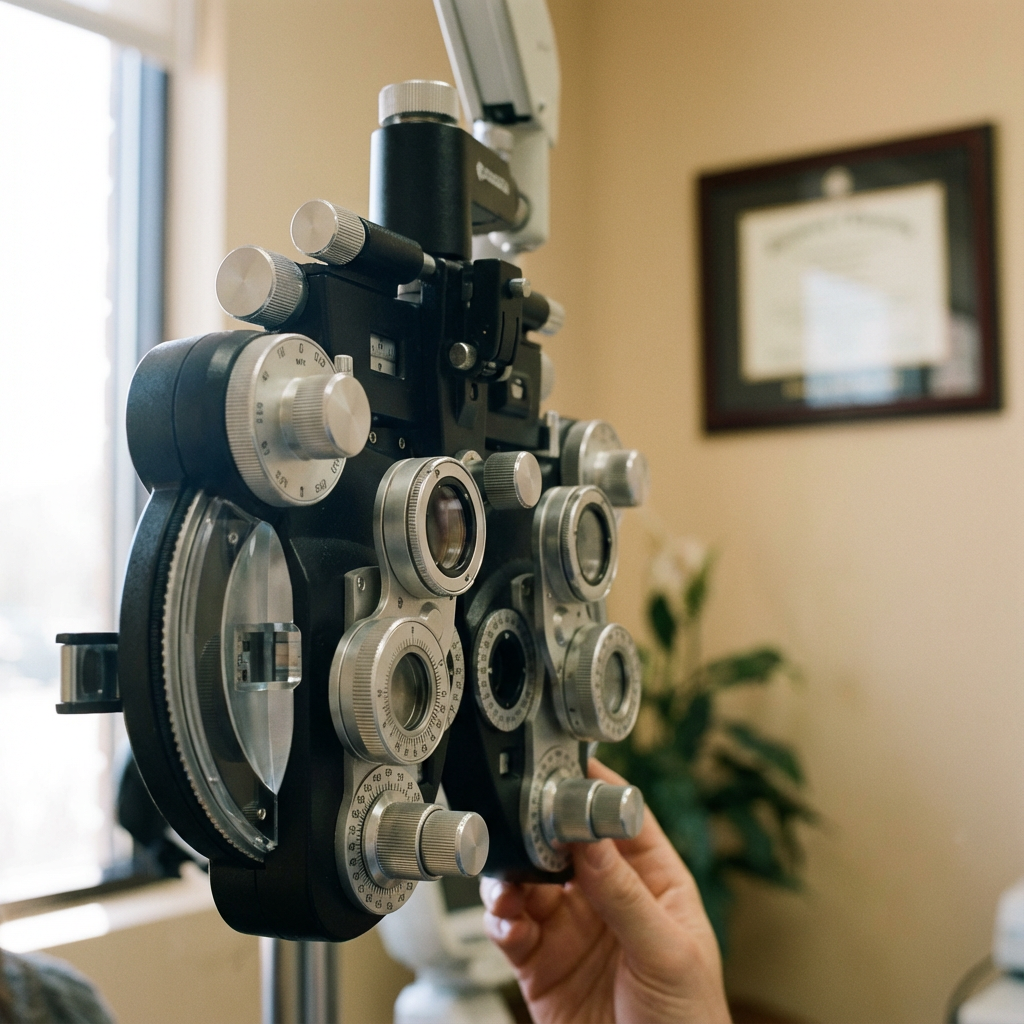
1. Comprehensive Consultation
We start with a full consult: your symptoms, goals, eye health checks and a baseline vision/refraction so we know exactly what we’re aiming to improve
-
![Two computer monitors displaying scientific data, including colorful 3D and 2D visualizations of a shell and topographical maps, with charts and graphs related to research.]()
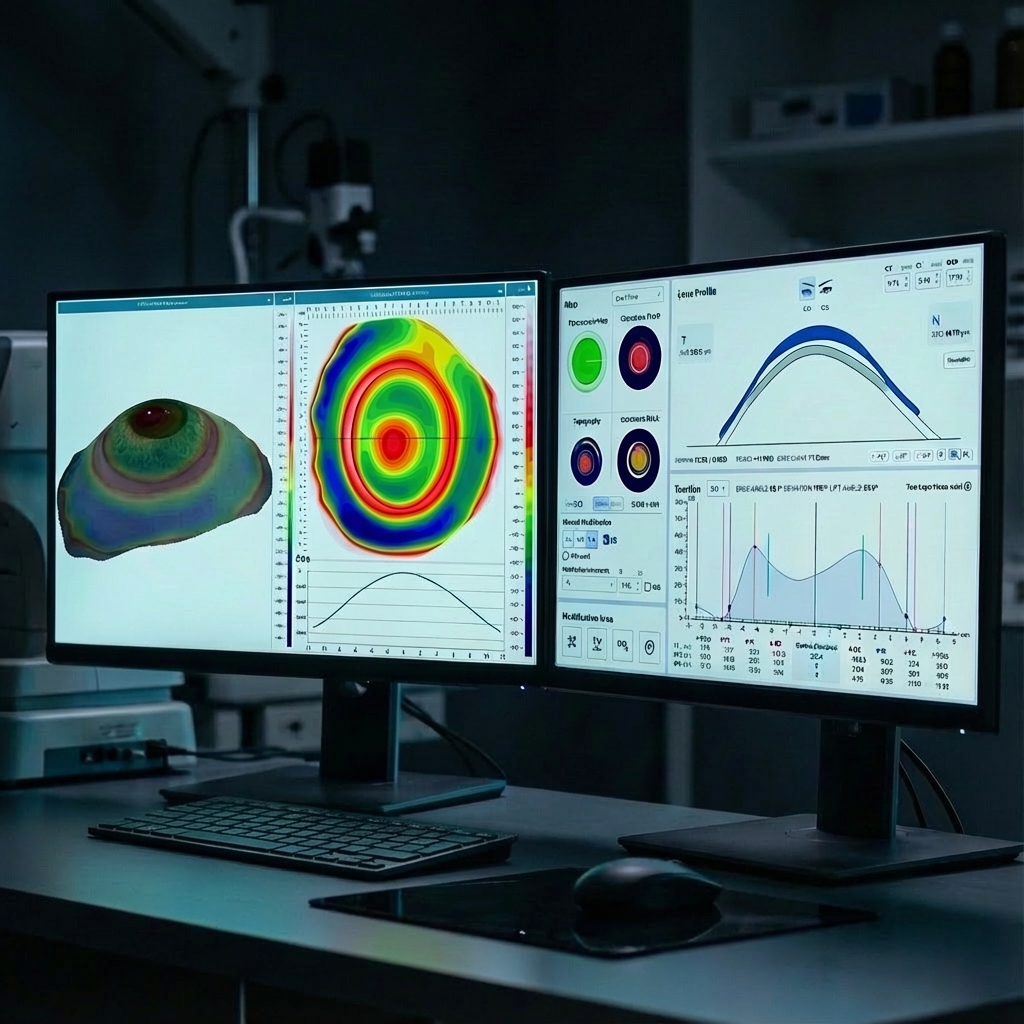
2. Corneal & Ocular Surface Mapping
We measure and map the shape of your eye using corneal topography (cornea) and ocular surface profiling (white of the eye) to guide a precise lens design.
-
![A contact lens case with two compartments, one with a blue tint and the other with a purple tint, a small white vial or container on a gray surface.]()
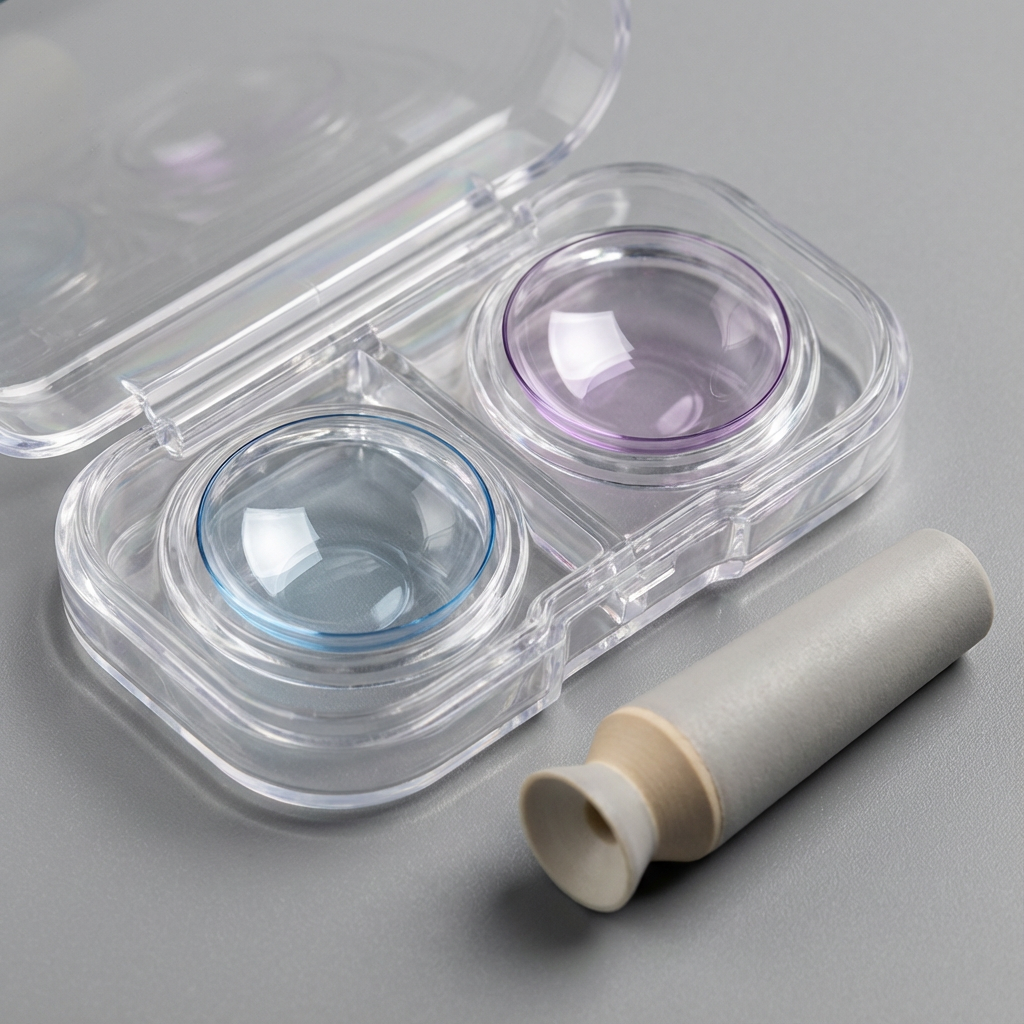
3. Lens Plan & Diagnostic Trial
Based on your maps, we select the best lens approach and use diagnostic lenses to assess fit, comfort, stability, and vision.
-
![Close-up of a human eye under fluorescence, showing a green iris and blue sclera, with detailed eyelashes and skin textures.]()
4. Custom Lens Design & Refinement
Your lens is then custom-made and refined until we’re happy with a healthy fit (clearance/alignment), crisp vision, and comfort.
-
![Contact lens solution, a small mirror, contact lens case, and a lens applicator on a table with tissues in the background.]()
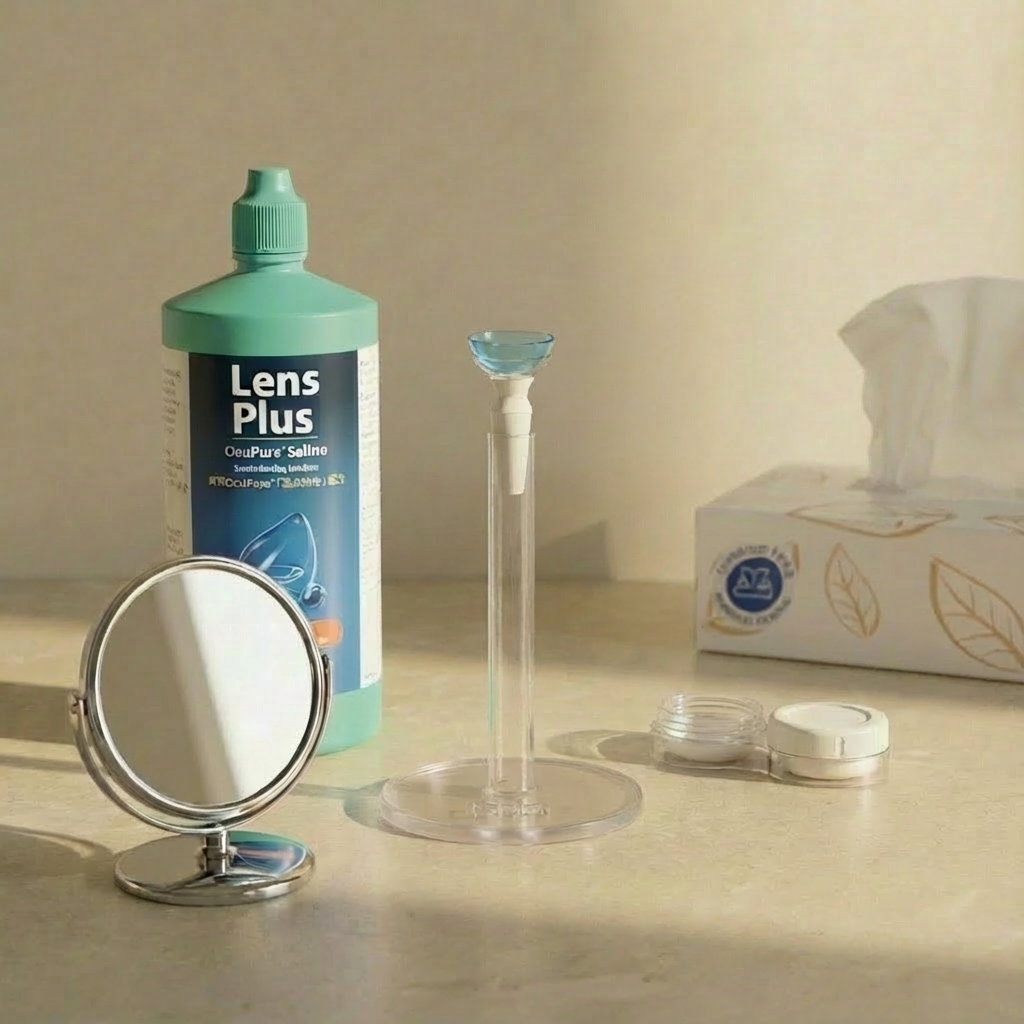
5. Training, Aftercare & Ongoing Monitoring
We coach you on insertion/removal and safe care, then schedule aftercare visits to fine-tune performance and protect long-term eye health.

Frequently Asked Questions
-
So far there is no cure, but Collagen Cross-Linking (CXL) can assist with halting progression, and custom lenses with advanced designs can restore vision. We will refer you for CXL should we detect progression and should your eyes be eligible for it.
-
Results vary by severity, but our goal is to achieve the best potential vision your eye is capable of. Most patients see a significant improvement over glasses.
-
Irregular cornea patients usually return every 6–12 months for monitoring to ensure the fit remains safe and the condition hasn't changed.